
ADVANCED EYE CARE
Advanced Cataract Surgery
microsurgical techniques and premium intraocular lenses (IOLs).
15–20 Min
Day Care Surgery
Premium IOL
Advanced Lens Technology
Safe & Painless
Minimally Invasive Procedure
What is Advanced Cataract Surgery
Advanced Cataract Surgery is a minimally invasive surgical procedure that removes the clouded natural lens and replaces it with a clear artificial intraocular lens (IOL). Modern surgical techniques allow ophthalmologists to perform the procedure through a tiny incision, minimizing trauma to the eye and promoting faster healing.
Today’s advanced methods use high-precision equipment, computer-assisted measurements, and premium lens implants to provide sharper vision and reduce dependence on glasses. The surgery is generally completed within 15 to 20 minutes under local anesthesia, allowing patients to return home the same day.
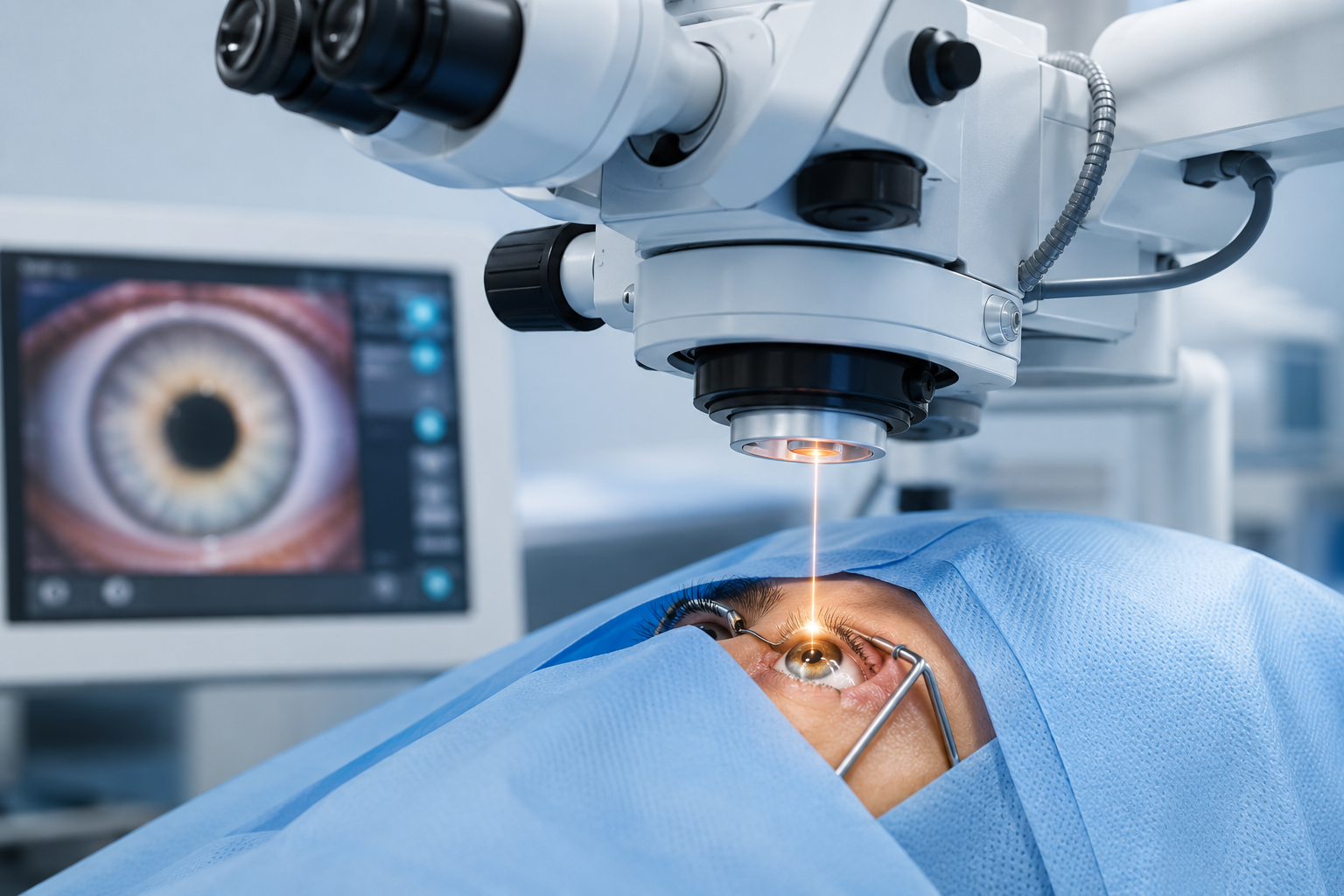
Advanced Cataract Surgery
Restore Clear Vision with Advanced Cataract Surgery
Vision is one of our most valuable senses, and cataracts can gradually interfere with everyday activities such as reading, driving, watching television, or recognizing faces. Advanced Cataract Surgery is a modern, highly effective treatment designed to remove the cloudy natural lens of the eye and replace it with a premium artificial intraocular lens (IOL). With the help of cutting-edge technology and experienced ophthalmic surgeons, the procedure offers exceptional visual outcomes, minimal discomfort, and a faster recovery compared to traditional cataract surgery.
Whether your cataracts are affecting one eye or both, early diagnosis and timely treatment can significantly improve your quality of life. Our advanced surgical techniques focus on precision, safety, and personalized care, ensuring every patient receives the best possible visual results
Understanding Cataracts
A cataract is the clouding of the eye’s natural lens, which normally focuses light onto the retina to produce clear vision. As the lens becomes cloudy, light cannot pass through effectively, leading to blurred or distorted vision.
Although cataracts most commonly develop due to aging, they can also occur because of diabetes, eye injuries, prolonged use of steroid medications, excessive ultraviolet (UV) exposure, smoking, or certain inherited conditions. Cataracts usually develop gradually, meaning symptoms may not be noticeable in the early stages. As the condition progresses, vision continues to deteriorate until daily activities become difficult.
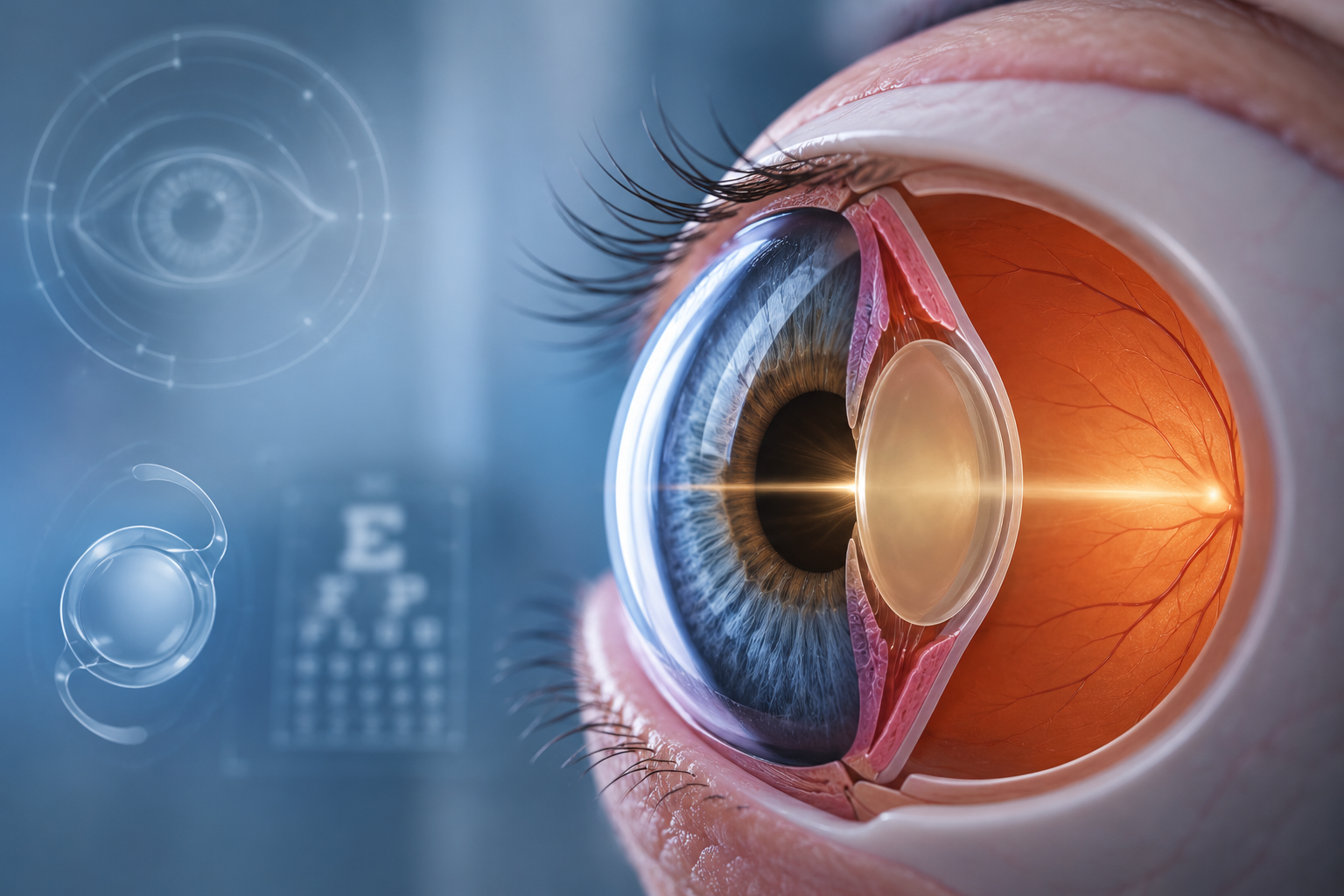
Signs and Symptoms of Cataracts
Common symptoms include:
- Persistent blurred or cloudy vision
- Difficulty reading, even with glasses
- Increased sensitivity to bright lights
- Halos around headlights and streetlights during nighttime driving
- Colors appearing faded or yellowish
- Frequent changes in eyeglass prescription
- Poor night vision
- Double vision in one eye
- Difficulty recognizing faces from a distance
- Reduced contrast and overall visual clarity
If you experience any of these symptoms, a comprehensive eye examination can determine whether cataracts are affecting your vision.
Advanced Cataract Surgery Techniques
Phacoemulsification
Phacoemulsification is the gold standard technique for cataract removal. During the procedure, a tiny ultrasonic probe breaks the cloudy lens into microscopic fragments, which are gently removed through a small incision. A foldable intraocular lens is then inserted into the eye.
Advantages
- Small self-healing incision
- No stitches required in most cases
- Minimal discomfort
- Reduced risk of complications
- Quick visual recovery